Parque del Retiro — Estanque Oval
Parque del Retiro, Madrid, Spain
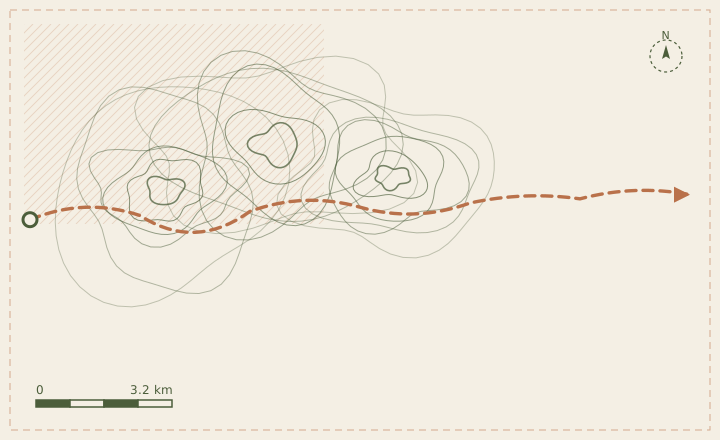
About this route
When to walk it
Madrid is at 650 m and the park is hottest from late June to early September, when a 7 am start is the only sensible option. October and November are the best months: the plane trees turn and the light is long and low all afternoon.
Numbers are estimates for the pace named above; the ground decides the rest.
Sensory anchors
Five things this ground gives you to notice. Each script paragraph ends on one of them.
- Sight The Estanque is a 280 m long sheet of water with the Alfonso XII monument rising behind it; the whole composition is visible in one glance from the south bank.
- Sound Rowboats on the water, the scrape of oars in locks, and behind them a city that is genuinely loud — the M-30 is under 400 m away.
- Touch The paths around the Estanque are rolled gravel over hardpan; in summer they are warm through thin soles by mid-morning.
- Smell Dust and hot stone in summer, cut grass after the mowers pass, and in autumn the sweetish smell of plane leaves breaking down.
- Breath Flat, generous paths allow six in and six out; the one short rise to the monument takes a four-count.
Walking script
Choose a script
-
The Retiro was a royal retreat from the 1630s and became a public park in 1767. The Estanque oval is the formal centre of it, and a loop of the water with the two side paths is about 3.2 km. Start from the Puerta de Alcala side so that the monument is in front of you for the first half.
Sight · The Estanque is a 280 m long sheet of water with… -
This is a park with a strong centre of gravity. The whole design pulls the eye to the water and the monument, which means walking here is unusually easy to do badly — you can spend the entire loop looking at one thing. Give the first kilometre a nearer object: the plane trees, which are pollarded every winter into fists of knuckle-like growth.
Sound · Rowboats on the water, the scrape of oars in loc… -
The northern path is wide, busy and lined with booksellers and street performers on weekends. Walk it at a steady medium pace and use the crowd as a timing device rather than a distraction. Matching your stride to a group walking ahead for thirty paces is a useful way to keep a pace without a watch.
Touch · The paths around the Estanque are rolled gravel … -
At the eastern end the path rises about 20 m to the level of the monument. It is a short climb and the only real change in elevation on the route. Shorten the count to four paces in, four out, and let that be the whole instruction for the rise.
Smell · Dust and hot stone in summer, cut grass after th… -
The southern bank is quieter and has benches facing the water. Sit for three minutes and watch the rowboats. There are 100 or so of them and they move at about the speed of a slow walk, which makes them a good external clock for the pace you should be holding.
Breath · Flat, generous paths allow six in and six out; t… -
The last stretch returns along the western side through the rose garden, which is at its best in May and again in October. The path here is narrower and the trees close overhead. This is where the walk stops being about the park's composition and becomes about the immediate surroundings — a useful switch at the end of a route that started with a wide view.
Sight · The Estanque is a 280 m long sheet of water with… -
End at the Fallen Angel fountain, which is the park's most photographed object and the place where most visitors stop walking. Stand beside it for one minute rather than joining the queue of photographs, then leave by the Puerta de Alcala.
Sound · Rowboats on the water, the scrape of oars in loc…
Before you walk
General wellbeing information, not medical advice. Madrid's summer heat is a genuine hazard between 1 pm and 6 pm from June to September; the park's shade is uneven and the nearest drinking fountains are at the Estanque's south side. The park closes at 10 pm in summer and earlier in winter.
Walking guidance on this site is general wellbeing information. It is not medical advice and it does not replace a clinician.