Kyoto Imperial Park Gravel Circuit
Kyoto Gyoen, Kamigyo Ward, Kyoto, Japan
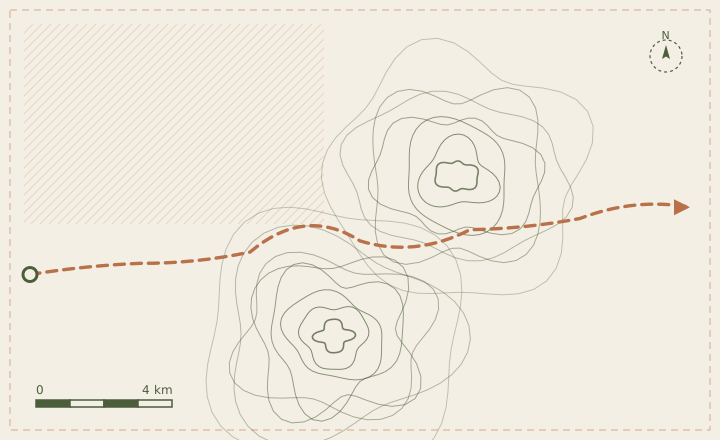
About this route
When to walk it
The gravel circuit is walkable all year and is at its best in the two weeks of cherry blossom in early April and in the second half of November. August is humid and the shade is limited on the south and west sides, so a 6.30 am start matters more than any other decision.
Numbers are estimates for the pace named above; the ground decides the rest.
Sensory anchors
Five things this ground gives you to notice. Each script paragraph ends on one of them.
- Sight Gravel the colour of pale sand, raked into faint arcs, running between low clipped pines and a kilometre of unbroken grey wall.
- Sound The crunch of gravel is the loudest continuous sound here; a hundred other people produce it at once, and the aggregate is a soft, steady surf.
- Touch Gravel here is fine and slightly damp under the surface, so the foot sinks about a centimetre and rolls a little on landing.
- Smell Dust after dry days, wet gravel after rain, and, in June, the flat green smell of cut grass along the western edge.
- Breath Flat ground and even gravel make a long count possible: eight paces in, eight out, with no need to shorten on any section.
Walking script
Choose a script
-
Enter from the north gate at Karasuma and go anticlockwise. In the early morning the circuit is used by runners going the other way, and walking against the flow means every passing is a meeting rather than an overtaking, which sets a calmer tone for the first kilometre.
Sight · Gravel the colour of pale sand, raked into faint… -
The circuit is 4 km with almost no elevation change — about eight metres of total gain. Flat, wide, uniform ground is a specific condition: it removes every excuse for the body and puts the whole practice in the attention. That is harder than a hill, not easier.
Sound · The crunch of gravel is the loudest continuous s… -
For the first kilometre, use the gravel as the object. Every footfall makes the same sound and leaves the same print. Try to hear a single footfall rather than the continuous crunch. Most people can do this for ten or fifteen steps before the sound merges again.
Touch · Gravel here is fine and slightly damp under the … -
The northern third runs along the wall of the old palace enclosure. The wall is over 700 m long and its rhythm is deliberately uniform. Walk this stretch with the breath on an eight-count and no other instruction. Rhythmic surroundings make a long count sustainable; use them.
Smell · Dust after dry days, wet gravel after rain, and,… -
Around the middle of the west side there are benches under pines. Sit for two minutes, but keep the count running rather than stopping the practice entirely. Sitting inside a walking practice is a change of posture, not an interruption.
Breath · Flat ground and even gravel make a long count po… -
The southern section is the busiest and the most open. This is where the walk stops feeling private. Treat the crowd as part of the object: notice how the crunch changes when forty people are doing it at once rather than four. The sound carries no information about any individual, which is unusual in a public space.
Sight · Gravel the colour of pale sand, raked into faint… -
Finish at the gate you entered by, or at the north-west corner if you want a shorter close. Kyoto Gyoen has been public ground since 1949, and on a weekday morning before seven it is largely empty. Walk the last hundred metres at whatever pace your body has settled into rather than the pace you set out with.
Sound · The crunch of gravel is the loudest continuous s…
Before you walk
General wellbeing information, not medical advice. The park is open from early morning to around 8 pm and gates close on time. Gravel is loose at the edges and there is very little shade on the south side in summer — carry water between June and September.
Walking guidance on this site is general wellbeing information. It is not medical advice and it does not replace a clinician.